

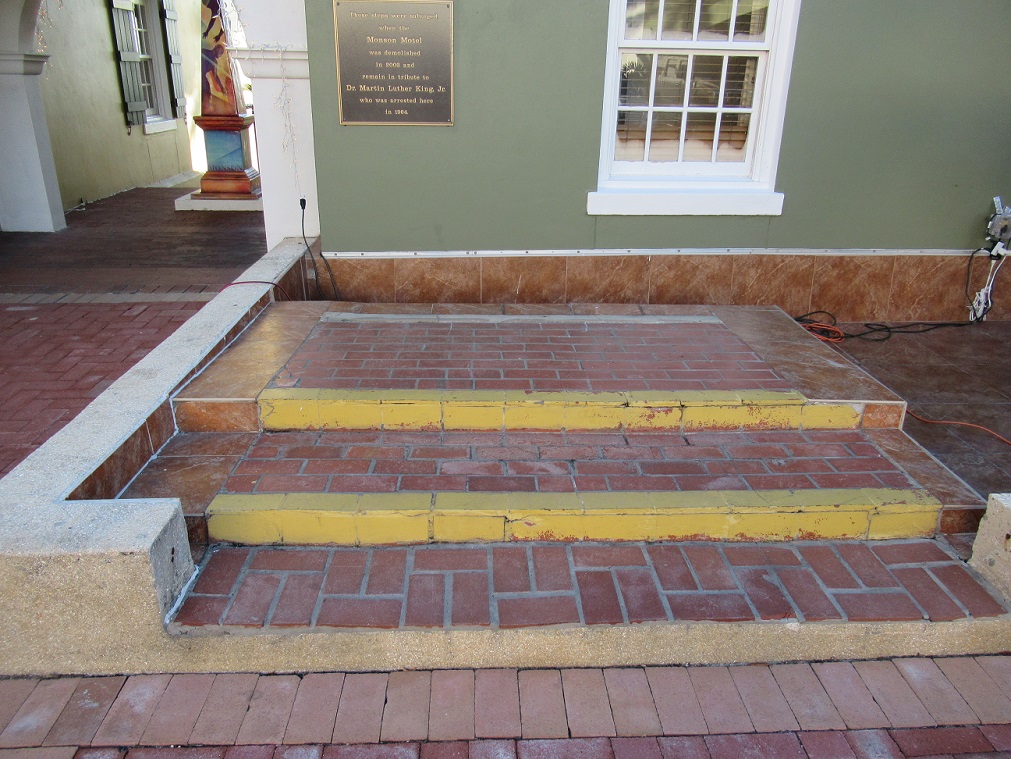
This plaque reads “These steps were salvaged when the Monson Hotel was demolished in 2003 and remain tribute to Dr. Martin Luther King Jr. who was arrested here in 1964.”
Black History Month offers a chance to experience St. Augustine with fresh perspective, to think about the history in each cobblestone or brick you tread upon. While many visitors arrive knowing the city as the nation’s oldest, fewer realize how deeply African American history is woven into its story from the very beginning. These stories are not confined to one site or era. They appear across the city, in historic neighborhoods, preserved landmarks, and cultural spaces that continue to share them today.
This month is an opportunity to explore those connections more fully. From the early Africans who helped shape the colonial city, to the founding of Fort Mose, to the growth of Lincolnville and the pivotal role St. Augustine played in the Civil Rights Movement, our Old City holds layers of history that reward a closer look. As you move from place to place, each stop adds context, turning a visit into a deeper understanding of how African American heritage continues to shape St. Augustine’s past and present.
The Story Begins Before America
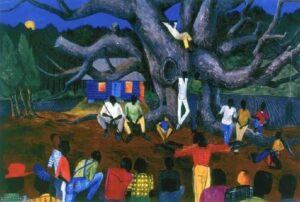 Long before the United States was a nation, St. Augustine was already a crossroads where cultures met, mixed, and made history. When Spanish explorer Pedro Menendez de Avilés founded the city in 1565, he came with sailors, soldiers, settlers, and yes, people of African descent. Research by the U.S. National Park Service shows that both free and enslaved Africans were among the early residents who helped build and sustain the new settlement. These early Africans worked on fortifications, cleared land, and contributed to the community’s survival.
These beginnings highlight something potent and beautiful: Black history here did not start in the 1800s or the Civil Rights era. It was there from the very beginning. And that long arc of history is part of what makes this Old City so unique.
Fort Mose: America’s First Free Black Town
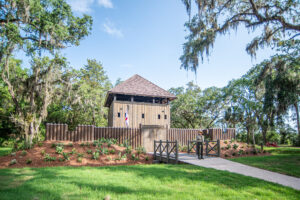
If there is one place in St. Augustine that uniquely embodies Black history in America, it is Fort Mose Historic State Park. Established in 1738 as Gracia Real de Santa Teresa de Mose, this was the first legally sanctioned free Black settlement in what would become the United States. Runaway slaves from British colonies escaped south to Spanish Florida because Spain offered freedom to those who converted to Catholicism and pledged loyalty to the Spanish Crown.
Imagine people seeking freedom, walking miles through swamps and forests with nothing but hope. When they reached St. Augustine and found refuge at Fort Mose, they built a community there. Men, women, and children tilled land, raised families, and served as militia members to help defend the colony. Their sacrifices changed history long before the American Revolution.
In 2025 a full-scale reconstructed Fort Mose opened to the public near the original site, giving visitors a chance to walk where these brave souls lived, learned, and fought for freedom. Exploring this site is humbling and uplifting in equal measure. And if you are planning a February visit, the park’s Fort Mose Jazz and Blues Series is a celebration of culture and resilience featuring world-class performers over multiple weekends.
Lincolnville: The Heartbeat of a Community
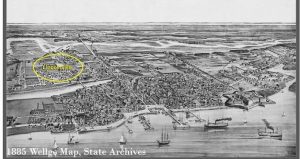
Just a short stroll from the Plaza de la Constitución lies a neighborhood that sings with untold stories. Lincolnville began as a settlement by freed Black people in the years after the Civil War and grew into a thriving and vibrant community. Today the neighborhood is home to the Lincolnville Museum and Cultural Center, a place where the African American experience is preserved with care and pride.
The Lincolnville Museum sits in the former Excelsior School, which was St. Augustine’s first public high school for Black students. It opened as a museum in 2005 and now features exhibits, lectures, lectures, and programs that highlight Black achievements and contributions to this city.
Walking through Lincolnville is like stepping into an intimate dialogue with history itself. You can almost hear the laughter of children once taught in that schoolhouse and feel the spirit of community gatherings held on its grounds. There is a deep sense that every street and corner has a story waiting to be shared.
Civil Rights in the Old City

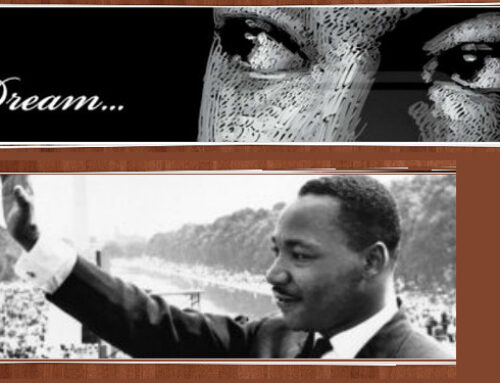
Photo Courtesy of floridahumanities.org
While the stories of early freedom seekers and thriving Black neighborhoods are essential, so too is the story of struggle and change.
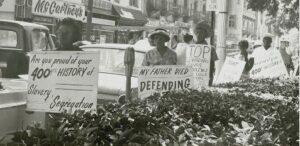
In the 1960s St. Augustine became a powerful chapter in the Civil Rights Movement. Local leaders like dentist Dr. Robert B. Hayling were instrumental in organizing protests, sit-ins, and marches that captured national attention and helped put pressure on lawmakers in Washington. The events here were part of what led to the passage of the Civil Rights Act of 1964. Today Dr. Robert B. Hayling Freedom Park stands as a thoughtful and reflective place honoring that history.
Another layer of civil rights memory lies at the Hilton Historic Bayfront Hotel, built on the site of the former Monson Motor Lodge, where Dr. Martin Luther King Jr. and others were arrested during protests. The hotel preserves the steps where King was taken into custody and includes a marker commemorating the struggle. Visiting these places today is both grounding and inspiring. These are reminders that our shared freedoms were fought for bravely and sometimes with great personal cost.
The Living Legacy in Art, Music, and Culture

Black history in St. Augustine is not only about museums and old buildings. It lives in art galleries, in performances, in music, and in the rhythms of community celebrations.
St. Augustine’s Black history has inspired contemporary art exhibitions and gallery showings. For example, local spaces will often highlight African American artists during February, showcasing works that connect present-day voices with ancestral narratives.
Likewise, the city’s deep connection with music is part of the heritage too. The jazz and blues tradition that pulses through the Fort Mose performances is not just entertainment. It is a living tribute to resilience, joy, sorrow, and celebration woven into the African American experience.
While you are here, consider finding opportunities to hear stories in live performances or join a community conversation at one of our local libraries. The Anastasia Island Library will host talks and programs during Black History Month featuring historians like David Nolan who explore the earliest Black settlers and their legacy in Old City.
Explore at Your Pace
St Augustine is rich with places that give context to African American heritage. Here are a few essential places to explore on your own or as part of a local tour:
-
Fort Mose Historic State Park – First legally sanctioned free Black town in the present United States. It tells a story of freedom, community, and resilience.
-
Lincolnville Museum and Cultural Center – A living archive of local African American stories, art, and history.
-
Dr. Robert B. Hayling Freedom Park – A tribute to local civil rights activism.
-
Hilton Historic Bayfront Hotel (Monson Motor Lodge) – Civil rights landmark with markers and preserved history.
- Accord Freedom Trail – Here you can gather information for a self guided tour of 20 out of 31 completed markers showing areas in St Augustine of American History. Open Tuesday – Friday 10am to 3pm. Call to schedule an appointment, (904) 347-1382.
If you want a historical perspective with a modern twist, the new St. Augustine Black History App is a great digital companion. Available for both Apple and Android devices, it maps historical places, significant people, themes, and timelines, helping you dive deeper into the stories that shaped Florida’s Historic Coast.
Make the Most of Your Visit
Black History Month is a great time to visit the Oldest City because it allows you to explore history in both structured and spontaneous ways. You can attend scheduled events, or you can create your own walking tour through neighborhoods like Lincolnville or along the riverfront sites that once bore witness to historic moments.
To make your exploration even richer, link history with other experiences in town. If you are interested in preservation and architecture you may enjoy our article on St. Augustine’s Foundation that explores some of the oldest buildings with stories that intersect with Spanish colonial architecture. You might also like to check out one of our older Black History Month posts to tie in some information missing from this post.
If you want to learn more about St. Augustine’s history of local activism, our post on Dr. Martin Luther King Jr. in St. Augustine and our post on Martin Luther King Jr. Day can give you a better understand of the part St Augustine played in the Civil Rights Movement. And be sure to check out our calendar listing for the Jazz at the Excelsior happening this February.
Why This Matters
Black History Month is more than a date on the calendar. It is an opportunity to reflect on stories that have often been overlooked. It is a chance to honor lives filled with courage, creativity, and strength. It is a reminder that the history of St. Augustine is not a single story, but a tapestry woven by many voices.
In St. Augustine the African American story stretches from the earliest days of European contact through hard-won freedoms and civil rights victories. It is stitched into the very fabric of the city’s identity.
As you wander our streets during Black History Month, take a moment to feel the weight of history beneath your feet and the promise of future stories yet to be told. There is no better place to celebrate the resilience of the human spirit and the enduring power of community.
Disclaimer: Every effort is made to ensure the accuracy of the information in this article. Please credit OldCity.com when sharing and re-posting.