

Walk down St. George Street on a humid August afternoon and you will feel it. The air cools as you pass beneath a second-story balcony. Your hand brushes against a coquina wall, rough with compressed shells, still holding the morning’s coolness despite the blazing sun. Wooden shutters filter light through barred windows, casting patterned shadows across worn stone floors. Even without knowing the history, your body understands that these buildings were designed to respond to their environment.
This is St. Augustine, America’s oldest city, and these structures have been doing their job for more than 450 years.
When most Americans picture colonial architecture, they imagine white clapboard houses, pitched roofs, and brick chimneys rising from snowy New England towns. St. Augustine tells a different story. Here, architecture reflects a southern climate, a Spanish worldview, and centuries of adaptation. The result is not a frozen historic style, but a living architectural language shaped by heat, storms, warfare, and cultural exchange.
Spanish colonial architecture in St. Augustine is not about ornamentation or symmetry. It is about survival, durability, and efficiency. Every wall thickness, courtyard, and shutter placement exists because it solved a problem. That practicality is precisely why these buildings have endured.
September 1565: Building on Borrowed Time

Pedro Menéndez de Avilés arrived on Florida’s northeastern shore on September 8, 1565, tasked with establishing a permanent Spanish settlement and securing the vital sea lanes that carried treasure from the Americas back to Spain. He named the settlement San Agustín in honor of the saint whose feast day marked their landing.
The earliest years were defined by urgency and instability. Colonists constructed crude shelters from palm thatch, wood frames, and packed earth. These buildings borrowed heavily from Indigenous Timucua construction methods, which were better suited to Florida’s climate than anything the Spanish had brought with them. Even so, structures were temporary by necessity. Hurricanes flattened homes. Fire swept easily through thatch roofs. Wood rotted quickly in the heat and humidity.
For decades, St. Augustine functioned as a precarious outpost rather than a true town. Supplies were inconsistent, labor was limited, and the constant threat of attack from rival European powers loomed. Yet abandoning the settlement was never an option. St. Augustine’s location made it strategically indispensable, and so the Spanish rebuilt again and again, learning through failure what could and could not last.
The Stone That Saved a City
That lesson arrived in the form of coquina. Found in massive deposits on nearby Anastasia Island, this shell stone was unlike anything European builders had worked with before. Soft when quarried, it hardened with exposure to air, creating a resilient but forgiving building material.
The turning point came in 1668, when English privateer Robert Searle burned St. Augustine nearly to the ground. The destruction forced Spanish authorities to confront an uncomfortable truth: wood construction was no longer viable. In 1672, work began on the Castillo de San Marcos, built entirely of coquina.
Completed in 1695, the Castillo transformed St. Augustine’s fate. During British sieges in 1702 and 1740, cannonballs embedded themselves harmlessly into the coquina walls instead of shattering them. Defenders patched damage overnight, while attackers grew increasingly frustrated. The fortress did more than repel invasions. It proved that St. Augustine could endure.
Once the Castillo demonstrated coquina’s value, its use spread throughout the city. Private homes, religious buildings, and civic structures followed. Coquina turned St. Augustine from a temporary foothold into a permanent city.
Building for the Heat
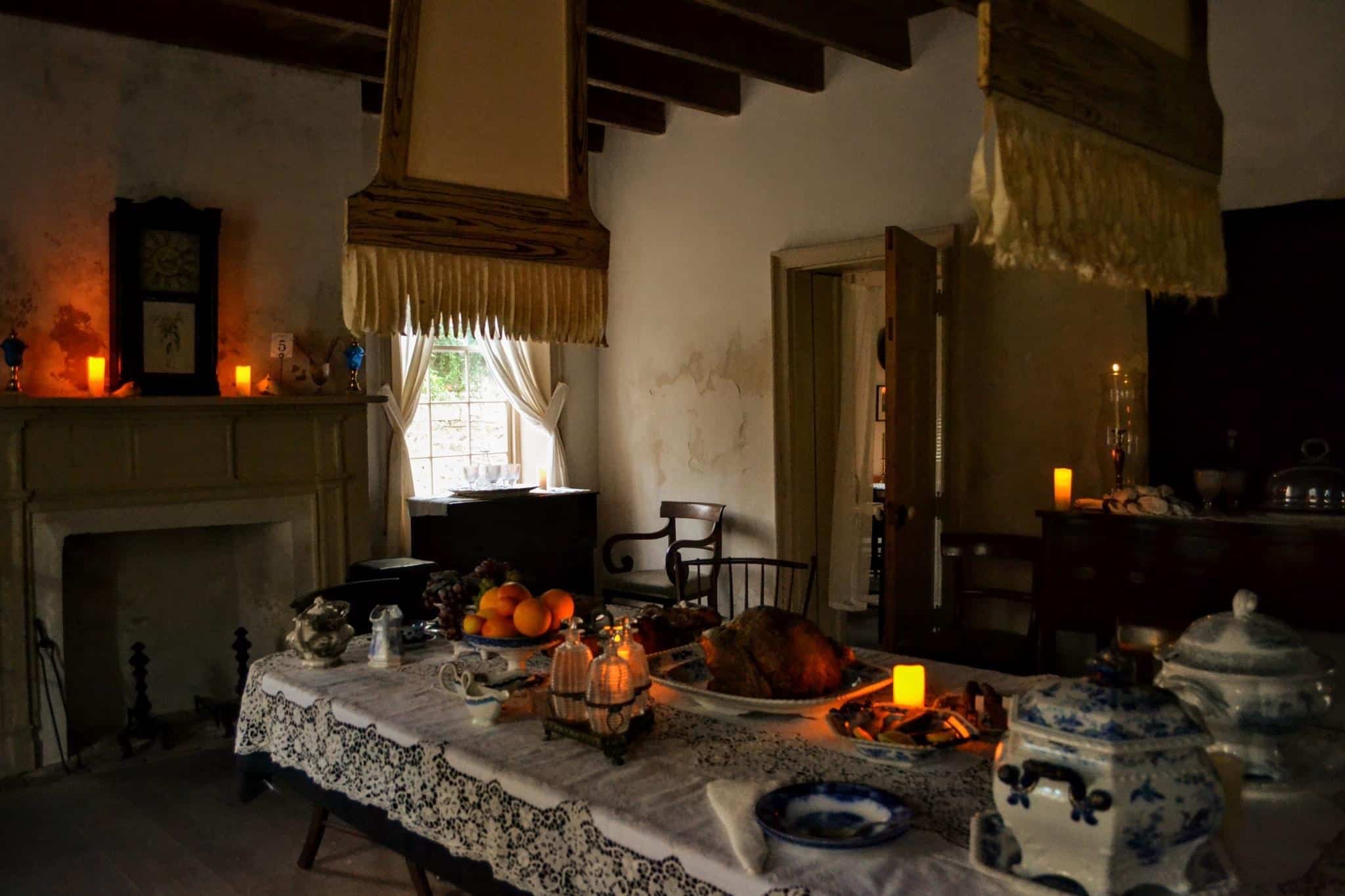
Spanish builders paired coquina with architectural principles refined over centuries in Spain, North Africa, and the Caribbean. Thick walls, often two to four feet deep, absorbed heat slowly, keeping interiors cooler during the day and warmer at night. These walls also provided sound insulation and structural strength against storms.
Coquina’s porous nature allowed moisture to escape rather than become trapped, reducing mold and decay. While builders did not understand the chemistry behind this behavior, they understood its benefits through experience.
Windows were intentionally small and strategically placed. Rejas, or wooden and iron grilles, provided security while allowing airflow. Glass was rare and expensive, so shutters became multifunctional elements that controlled light, ventilation, and protection from storms. Opening and closing them throughout the day was an essential part of managing indoor comfort.
Whitewashed walls reflected sunlight and helped regulate temperature. The lime-based coatings also protected the stone beneath, reinforcing the idea that beauty and function were inseparable. The city’s pale, sunlit appearance emerged not from aesthetic preference, but from environmental necessity.
The Architecture of Daily Life
Spanish colonial homes were designed for efficiency. Rooms were arranged in linear sequences without hallways, maximizing usable space. Doors aligned to encourage airflow, while high ceilings allowed hot air to rise above living areas.
Most homes opened onto a walled courtyard or garden at the rear. These spaces were essential extensions of the home, serving as kitchens, workspaces, gathering areas, and places of rest. In Florida’s climate, daily life unfolded outdoors as often as it did indoors, and courtyards provided shade, privacy, and circulation.
Roofing materials reflected availability and status. Clay tile was preferred for durability and heat resistance, but its cost meant many homes began with wooden shingles or thatch. Floors ranged from packed earth to tabby, with brick and imported wood appearing as prosperity allowed.
The Llambias House illustrates this evolution clearly. Built before 1763, it began as a modest coquina structure and expanded over time. Each addition reflects changing needs, resources, and cultural influences, making the house a physical record of life in colonial St. Augustine.
When the British Came

In 1763, Florida passed to British control. Spanish residents departed, but their buildings remained. British settlers adapted them to suit their own habits, adding glass windows, chimneys, second stories, and more formal room divisions.
When Spain regained Florida in 1783, returning colonists incorporated many of these changes rather than reversing them. The result was architectural hybridity rather than replacement. Spanish, British, and later American influences layered over one another, creating the complex built environment that defines the city today.
The Town Takes Shape
Spanish law required towns to be organized around a central plaza, which served as a civic, military, and religious focal point. In St. Augustine, the plaza connected government buildings, the cathedral, and public gathering spaces.
Streets radiated outward in a grid adjusted to terrain and climate. Narrow streets provided shade and protection from winds, while subtle curves limited enemy sightlines. St. George Street’s layout encouraged movement and commerce while remaining defensible.
This urban design balanced human comfort with military strategy, shaping how residents and visitors experience the city even now.
Fort Matanzas: The Smaller Sentinel
After British forces nearly starved St. Augustine during the 1740 siege, Spanish authorities recognized the need to protect southern supply routes. Fort Matanzas, completed in 1742, guarded the inlet south of the city.
Though smaller than the Castillo, the fort played a critical role in the city’s defense network. Its survival underscores how Spanish architecture extended beyond city walls to secure the region as a whole.
The Architecture of Faith
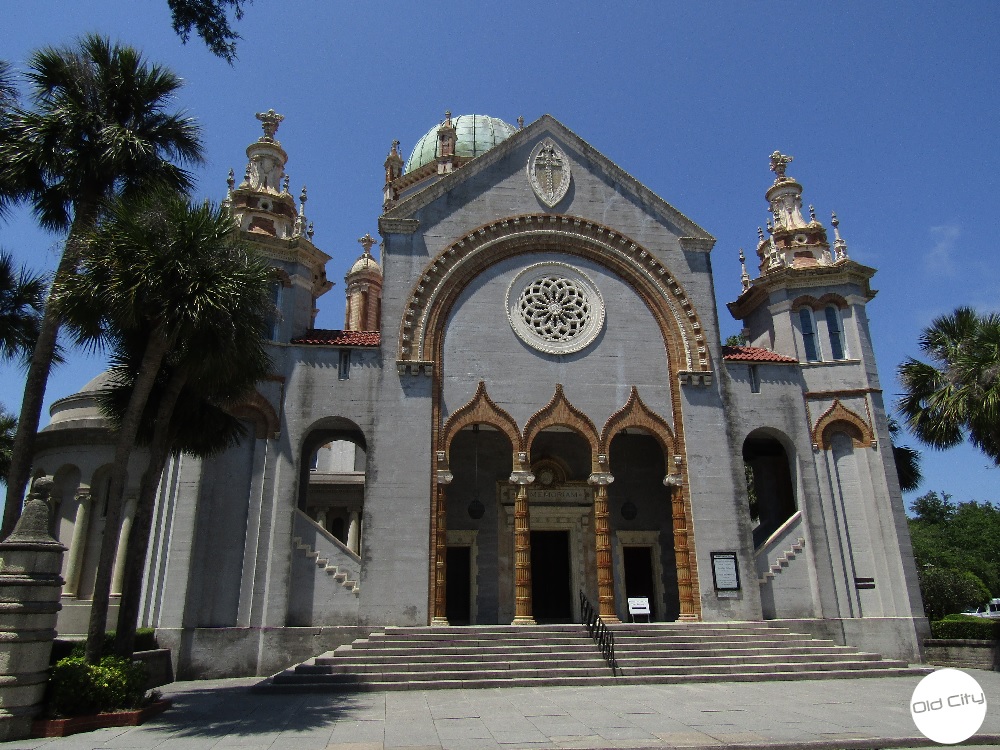
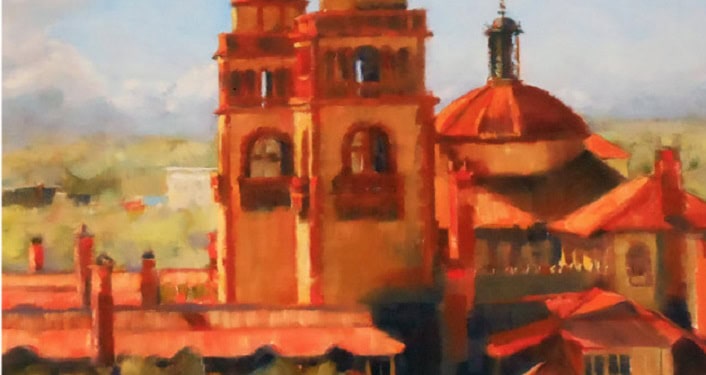
Photo Above of Memorial Presbyterian Church built by Henry Flagler.
Religion was central to Spanish colonial life, and churches reflected that importance. The Cathedral Basilica of St. Augustine traces its origins to the city’s founding in 1565, making it the oldest Catholic parish in the continental United States.
Built of coquina and repeatedly rebuilt after fires and storms, the cathedral embodies endurance and adaptation. Like homes and forts, it was designed to withstand climate and time, reinforcing faith as both a spiritual and physical presence in the city.
Henry Flagler Changes Everything
By the late nineteenth century, St. Augustine had faded into obscurity. Henry Flagler’s arrival transformed it into a winter resort destination. His Hotel Ponce de Leon introduced Spanish Renaissance architecture, blending romanticized historical elements with modern technology and luxury.
Though not truly colonial, Flagler’s buildings reshaped how St. Augustine understood and marketed its past. They reinforced Spanish design as the city’s defining visual identity and ensured the preservation of older structures by reframing them as assets rather than relics.
Living History: Buildings You Can Visit
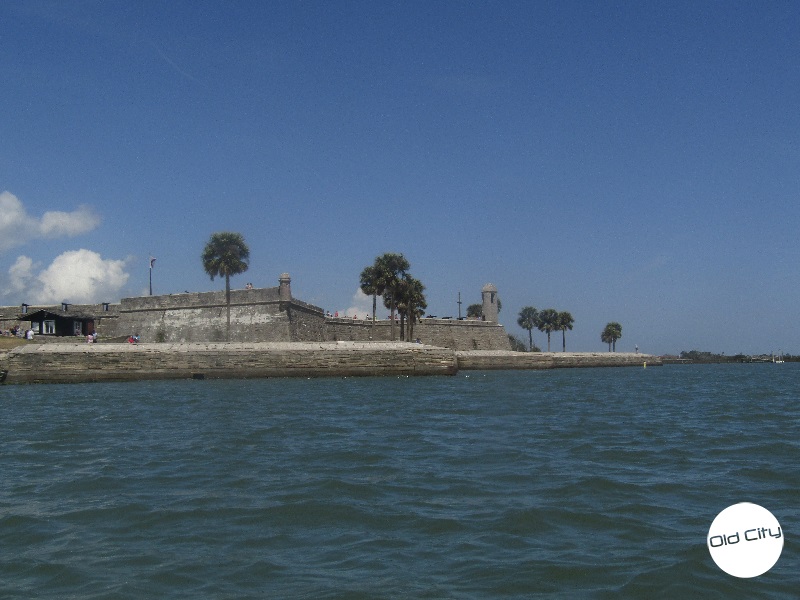
St. Augustine’s architectural legacy remains tangible. Visitors can step inside structures that span centuries of use.
The Oldest House Museum Complex reveals early Spanish domestic life. The Ximenez–Fatio House reflects layered Spanish and British influence along Aviles Street. Flagler College and the Lightner Museum showcase Spanish Colonial Revival at a monumental scale. Villa Zorayda illustrates Moorish inspiration and experimental construction techniques.
Together, these buildings form a walkable timeline, allowing visitors to experience history not as abstraction, but as space.
What Endures
What makes St. Augustine’s architecture remarkable is not simply its age, but its continued relevance. Thick walls still cool interiors. Courtyards still create livable outdoor rooms. Narrow streets still offer shade and shelter.
These buildings remind us that sustainable design is not new. It emerges naturally when architecture responds honestly to climate, materials, and human need. Preservation here is not about freezing a moment in time, but about respecting solutions that continue to work.
The Long View
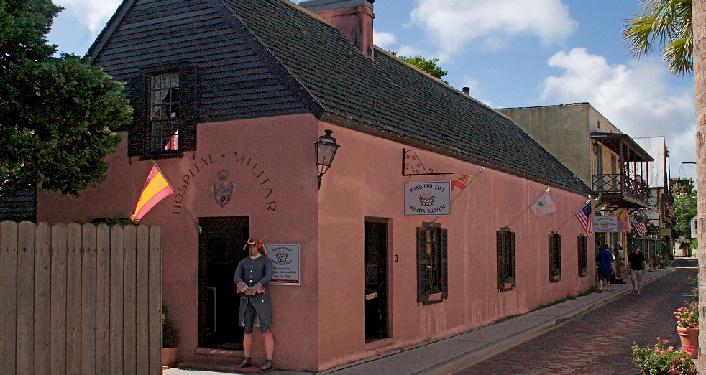
Spanish colonial architecture in St. Augustine tells a story of resilience, adaptation, and cultural blending. Built from shell stone and necessity, these structures reflect centuries of lived experience rather than imposed design.
More than 450 years after its founding, St. Augustine still speaks through its walls, courtyards, and streets, offering lessons in endurance that feel increasingly relevant today.
Disclaimer: Every effort is made to ensure the accuracy of the information in this article. Please credit OldCity.com when sharing and re-posting.